
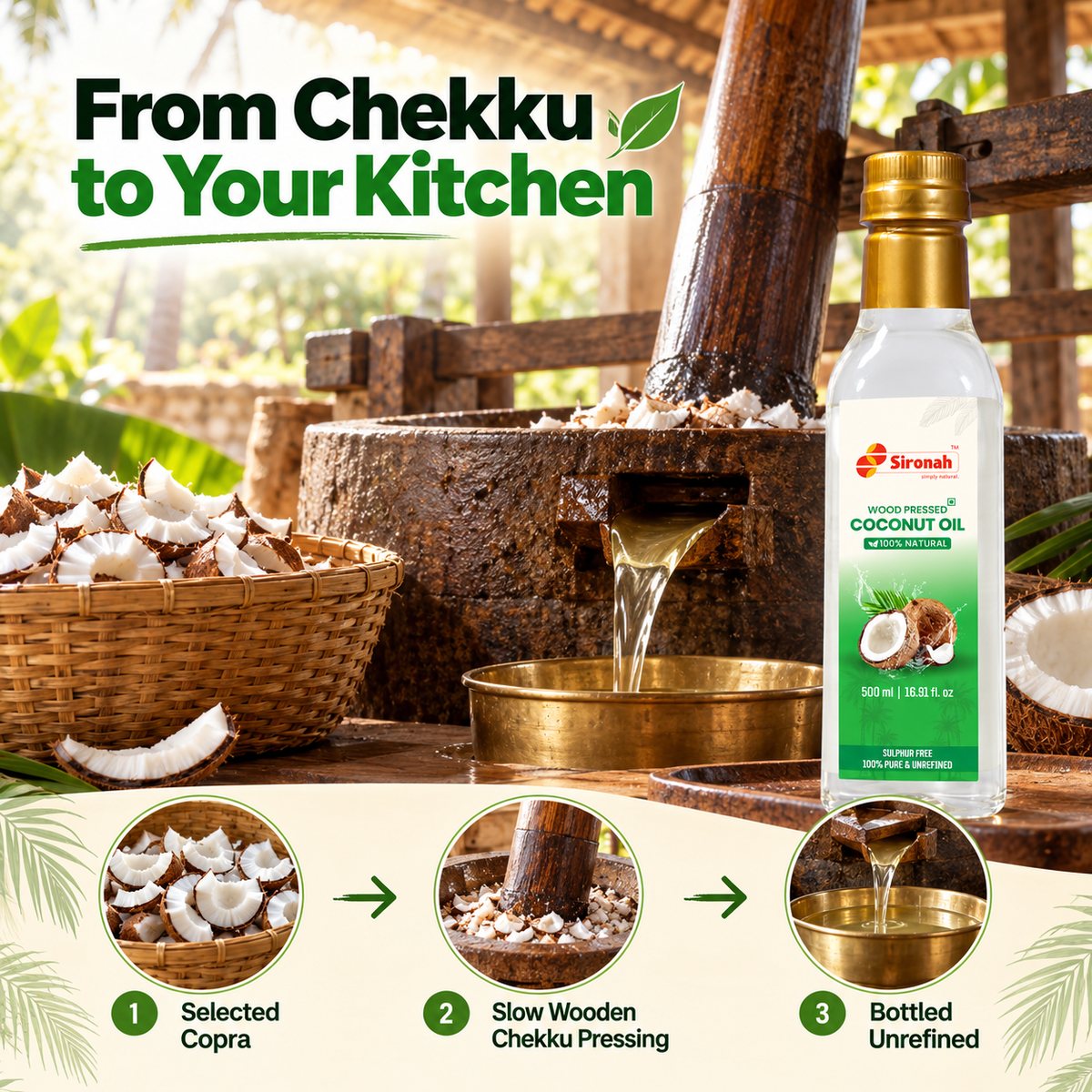
Before big refineries and shiny plastic bottles, almost every town in Tamil Nadu had a chekku – a large wooden mortar where oil was pressed slowly from copra, groundnuts or sesame. That is the method Sironah follows today.
How a wooden chekku works
Seeds or dried copra are placed in a deep wooden mortar. A heavy wooden pestle rotates slowly inside it, crushing and grinding the seeds until the oil separates. Because the pestle turns slowly and the wood does not heat up like metal, the oil is extracted at a low temperature.
How is it different from refined oil?
Most refined oils are extracted at high temperatures and then refined, bleached and deodorised to make them clear and neutral. Wood pressed oil skips all of that. It is simply filtered and bottled, so it keeps its natural colour, aroma and taste.
- Wood pressed: slow, low-heat pressing – filtered and bottled as it is
- Refined: high-heat extraction, then refining, bleaching and deodorising
What you will notice in your kitchen
The first thing most people notice is the aroma – coconut oil that actually smells of coconut, groundnut oil with a nutty warmth, and gingelly oil with its deep, toasty fragrance. Food tastes the way you remember it from your grandmother’s kitchen.
Because it is unrefined, wood pressed oil may look slightly cloudy or have a little natural sediment at the bottom. That is perfectly normal.